December 22, 2025
The Grinch Stole Christmas (Again): Confessions of a Former Ad Exec

One text changed my holiday spirit – forever.
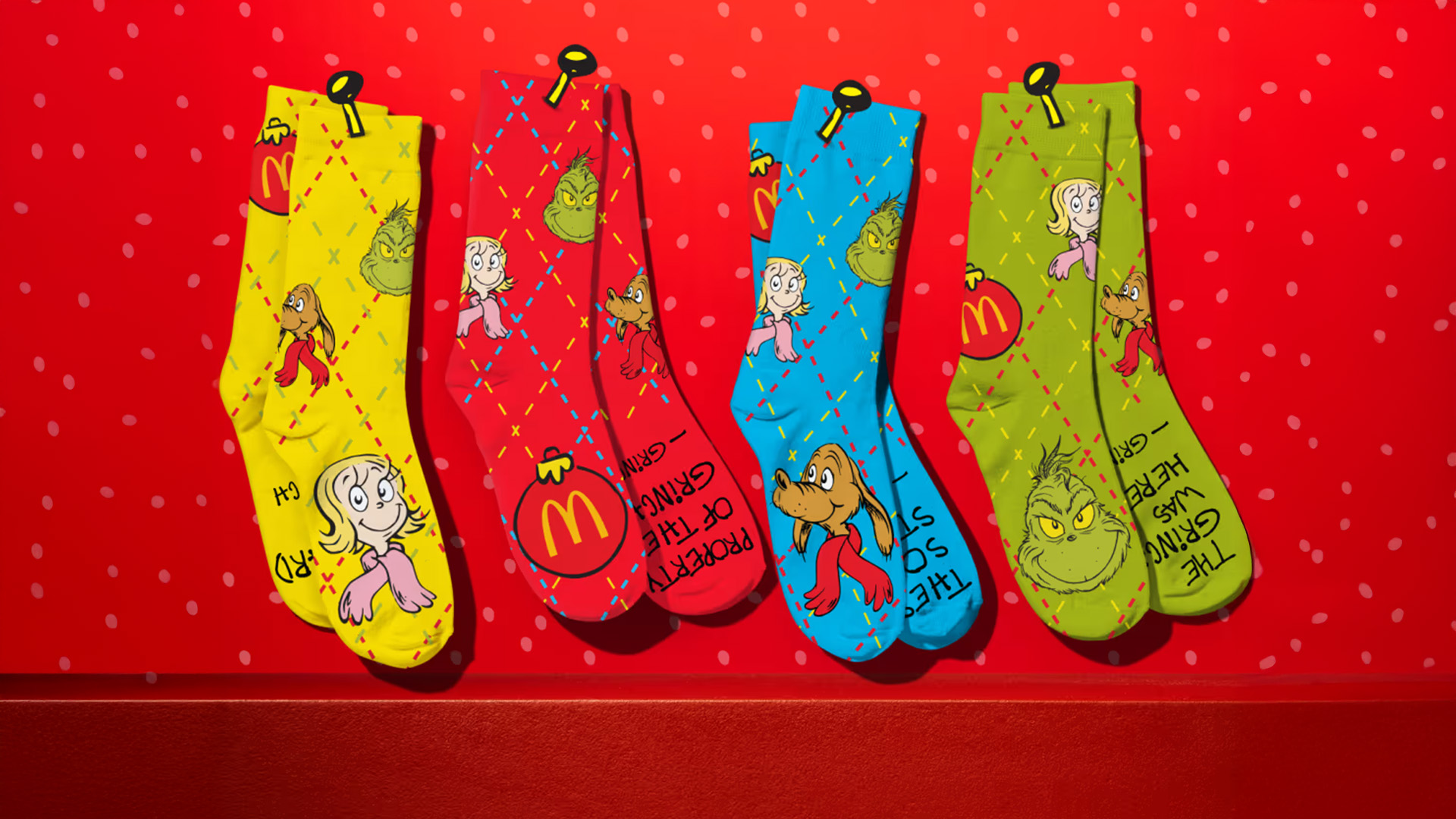
A friend shared a photo showing off her new “limited edition” Grinch holiday socks. They were adorable. They made me smile – big. Immediately,
I was hooked on the hunt!
I didn’t need them and could easily buy them somewhere else, but suddenly those Grinch socks felt essential to my happiness and holiday spirit.
Not realizing it was beginner’s luck and fortuitous timing, I landed my first Grinch Meal. I tore into the carefully designed, adult version of a Happy Meal box as if it were Christmas morning. Inside: a priceless pair of bold, blue Grinch socks.
The thrill of victory. I loved the Grinch Meal so much that I called family and friends to brag and ask if they had secured their meals and coveted Grinch socks.
I immediately wanted all of them.
I should have known better.
I spent decades in advertising and marketing. I’ve built campaigns. I’ve studied consumer behavior. I can spot scarcity tactics, nostalgia plays, and FOMO traps from a mile away.
Yet, there I was.
Fully invested.
All-in on the hunt.
The more I knew the deal was “limited,” the more relentless I became.
While driving to multiple McDonald’s locations across the region, I called friends to ask them to join me in the hunt and check their McDonald’s locations.
We texted updates like we were tracking a hurricane.
“Any socks?”
“Out already.”
“What about South Tampa McDonald’s?”
We came up empty-handed – every time.
“Sorry, Sold Out.”
No socks. No holiday-only dill French fries. Just the quiet, undeniable realization that I had been unapologetically caught in the exact hype that I made a business out of packing and selling.
Honestly, that’s the point.
This wasn’t casual interest; it was activated behavior.
The veteran marketer in me knew instantly this would be a case-study-level success. The formula was flawless and deeply human.
The Grinch works because he gives voice to the part of us that resents the noise, the excess, the forced cheer of the holidays. He accepts Christmas, but he rejects its commercialism and superficiality.
McDonald’s didn’t just license a character. They licensed permission to be a little selfish.
A little greedy.
Ok, obsessive.
It moved from consuming famously popular McNuggets and fries to an all-consuming hunt for collecting the scarcest and most popular items in pop culture.
Here’s the humbling truth: expertise doesn’t make you immune. Sometimes, it makes you more vulnerable.
I recognized every lever McDonald’s was pulling:
Scarcity? Check.
Nostalgia? A childhood staple.
Collectible? Socks are absurd—and therefore perfect.
Social proof? Friends, texts, group chats, shared frustration.
Exceptional execution of details? Double-check and check the branding awards!
To be clear, these campaigns don’t work by tricking us. They work by inviting us into play, into memory, into community. I wasn’t chasing fries. I was chasing the feeling of being part of the game.
When my friends and I all struck out, something unexpected happened: frustration didn’t kill the story; it fueled it. The sold-out signs. “You just missed it.”
The social posts confirmed shortages nationwide.
That’s not a flaw in collectible marketing, it’s the accelerant.
McDonald’s has seen this movie before with Pokémon, Grimace, and McDonaldland. They know scarcity creates backlash and buzz. And in a world where attention is the currency, buzz always wins.
The real question isn’t whether the Grinch Meal worked.
It did. The campaign didn’t just drive awareness or sales. It:
The fact that you’re asking, “Did it work?” instead of “Why didn’t I get it?” is the answer.
It worked brilliantly.
At $14 during a time when consumers are trying to spend less, this wasn’t about value. It was about participation.
About adults like me, who know better and still opt in.
The hunters.
The nostalgia lovers.
The marketers who fall for their own medicine.
This lifetime marketer says it plainly: Bravo, McDonald’s.
You didn’t just make people smile; you delighted even those who missed the Grinch Meal. Let’s be completely honest – all the frustration wasn’t aimed at the fast-food giant; it was self-directed. They weren’t mad it sold out; they were angry they didn’t move faster. Sure, I could buy Grinch socks on Amazon or any other retailer—but they wouldn’t feel the same. Because what McDonald’s sold wasn’t socks. It was the moment. And that’s how you know the campaign was a wild success.
And so, in the end, it seems perfectly clear:
The Grinch didn’t steal Christmas; he engineered cheer.
My heart stayed the same size, but one thing rang true:
That was marketing mischief done brilliantly, too.